
Saudi Arabia’s events industry has spent the past few years talking about demand — bigger festivals, busier calendars, more visitors. A quieter story has been building alongside it: supply. New numbers from the Saudi Conventions & Exhibitions General Authority (SCEGA) show the Kingdom’s exhibition and conference venue capacity grew 32 percent in a single year, part of a build-out that has more than tripled total exhibition space since 2018. For anyone planning, producing, or selling into events in Saudi Arabia, where that capacity is landing — and what kind of space it is — matters as much as the headline growth rate.
A Record Year for Venue Capacity
SCEGA’s latest infrastructure snapshot puts the Kingdom’s registered business event venues at 923, up 17 percent from 2023. Combined, these venues now offer 300,520 square meters of exhibition space, a 32 percent year-on-year increase and more than 320 percent growth since 2018. Conference seating capacity nationwide has climbed to 27,975 seats — nearly double the total recorded four years ago, with seating up 197 percent since 2018.
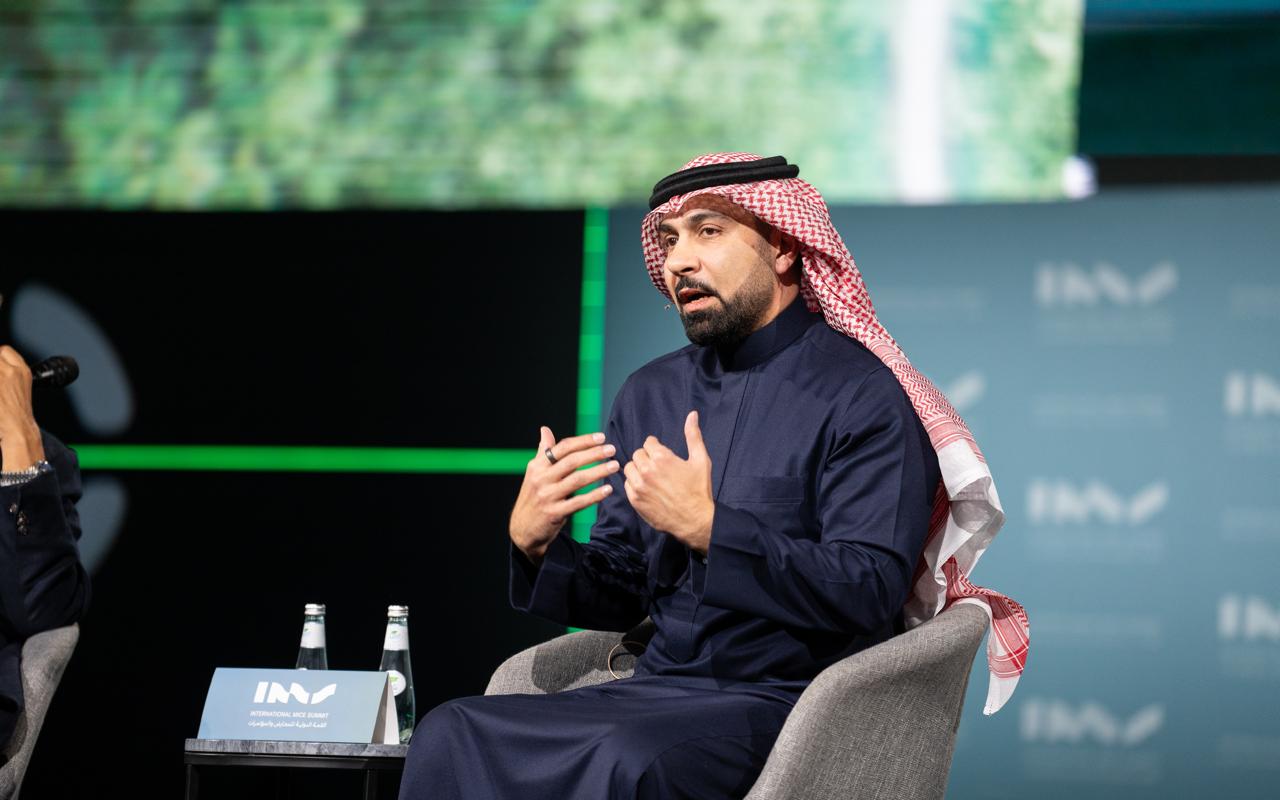
SCEGA Chairman Fahd Al-Rasheed framed the expansion as part of what he called a “golden decade of events,” pointing to Expo 2030 and the 2034 FIFA World Cup as milestones the sector is building toward. Whatever the long-term drivers, the near-term reality for venue operators, PCOs, and production companies is a rapidly growing pool of bookable space.
Where the Capacity Actually Sits
Growth isn’t evenly spread. Riyadh, Makkah, and the Eastern Province together account for roughly 90 percent of national capacity, anchored by a handful of large-scale venues:
- Riyadh Front Exhibition & Conference Center — around 70,000 sqm, plus the newer Riyadh Exhibition and Convention Center in Malham
- Jeddah Superdome — 34,000 sqm, described as the world’s largest geodesic dome, in the Makkah region
- Dhahran Expo Center — 25,600 sqm in the Eastern Province
Riyadh alone now hosts more than 250 registered venues, including the King Abdulaziz International Conference Center; the Makkah region counts 268.
The Regional Diversification Story
What’s newer is the push into provinces outside the traditional big three. SCEGA’s report highlights purpose-built facilities opening or scaling in secondary markets:
- King Salman International Conference Center — Madinah, roughly 2,500 seats
- Maraya Hall — AlUla, around 600 seats, built for a very different kind of event than a trade show
- King Khalid University Conference Center — Asir, about 3,500 seats
- Prince Mishaal Exhibition Center — Najran, roughly 7,200 sqm
For organizers used to defaulting to Riyadh or Jeddah, these venues represent genuinely new options — smaller in scale, but backed by newly established destination management organizations in each province, according to SCEGA.
What Kind of Space Is Actually Growing
The venue mix matters as much as the total footprint. According to SCEGA’s breakdown, the Kingdom’s inventory now spans:
- 42 dedicated exhibition and conference centres
- 106 commercial centres adapted for events
- 282 multi-purpose halls
- 493 hotel halls
Hotel ballrooms and multi-purpose halls still make up the bulk of the count — useful context for anyone assuming every new square meter is a purpose-built exhibition hall. The large-format venues get the headlines, but mid-size corporate and hotel-based events remain the volume business.
What This Means for Industry Professionals
- Venue sourcing just got more competitive. With capacity up sharply, RFPs from event organizers and brands have more genuine options — and more leverage — outside Riyadh and Jeddah.
- Secondary cities are worth a serious look. AlUla, Asir, Najran, and Madinah now have dedicated DMOs and purpose-built venues; production and logistics providers who build relationships early have a head start.
- Don’t underestimate hotel and multi-purpose venues. With 493 hotel halls and 282 multi-purpose spaces in the mix, corporate and mid-size event planners have far more inventory than the marquee convention centers suggest.
- Capacity growth will keep outpacing trained talent in the near term. As new venues open, staffing, AV, and production crews with venue-specific experience will be in demand across a wider geographic footprint.
Sources:
- Arab News — “Saudi Arabia’s events infrastructure surges 32%, fueling tourism goals”
- Saudi Press Agency — “SCEGA Reports Record Growth in Business Events Infrastructure”
- Meetings & Incentive Travel Magazine (SCEGA) — “Shaping the future of events in Saudi”
- Travel Daily News — “Saudi Arabia reports 32% annual growth in exhibition capacity”